QUINEAR Leg Recovery System Review: Recovery Boots Without the Normatec Price


RecoverStack may earn a small commission if you buy through links on this page, at no extra cost to you.
The QUINEAR leg recovery system sits in the awkward middle of the compression boot market. Normatec charges around $900 for its main system. The no name boots flooding Amazon run $100 to $140, and most of them squeeze your whole leg at once like a blood pressure cuff that lost the plot. QUINEAR asks about $280 for its QN-071A system and promises the thing that matters, a true chamber by chamber wave from foot to thigh. Going by the spec sheet and a close read of owner reports, most of that promise holds up.
Quick note on how we assessed this. We went through QUINEAR’s published specs for the QN-071A, checked them against the live listing, and read through owner reviews with an eye on the two groups who actually buy these: runners using them after a session, and people on their feet all day who just want the heaviness out of their legs.
Key Features
Four Chamber Wave
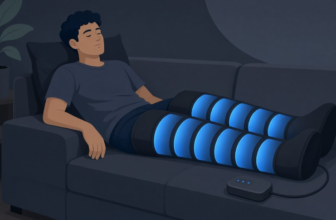
Foot, lower calf, upper calf, thigh. Each zone fills in order so fluid gets pushed up the leg instead of squeezed at random.
8 Pressure Levels
50 to 120 mmHg. Level 3 feels like a firm hug. Level 8 is a squeeze you schedule your day around. Most people land on 5 or 6.
Auto Calibration
A built in pressure sensor reads your leg size on the first fill, so thin calves and big quads get the same relative squeeze.
Set and Forget Timer
20, 25 or 30 minute sessions from the digital controller, with auto shutoff. You will doze off in these at some point. Everyone does.
What owning the QUINEAR looks like

A quick note on method before the details: we haven’t had a QUINEAR system on our own legs. Everything below comes from the manufacturer’s specs and manual, the listing, and the patterns that keep repeating across owner reviews.
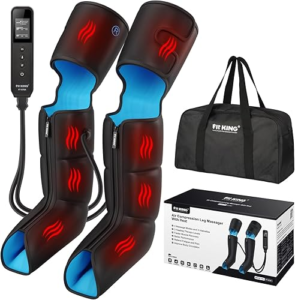
Setup looks simpler than the box of hoses suggests. It’s two boots, two hose bundles and one controller about the size of a hardcover book. The hoses click into the controller and the boots zip up to mid thigh, and owners generally describe getting into them in a few minutes.
Each session starts with a calibration pass. The boots inflate once, hold, deflate, and then the program begins. That’s the pressure sensor reading your leg size, and it’s the reason the same size can fit two people of different builds without either of them changing the intensity setting. Several owners mention thinking something was wrong the first time it happened, so it’s worth knowing in advance.
There are three modes. A runs a strict bottom to top wave. B holds each chamber longer before releasing, which works more like a deeper squeeze. C mixes the two.
On results, keep expectations reasonable. The published research on sequential compression is encouraging without being bulletproof, and some of what people feel is simply thirty minutes with their legs up. The real upside of owning boots is that it makes that thirty minutes easy to do every day.
Owners describe the noise as a low hum while the chambers fill, quiet enough to watch TV over. The bigger gap is heat. There isn’t any, and some cheaper rivals now bundle heated knee or thigh panels. If warmth is half the reason you want boots, that’s worth knowing before you spend $280.
One fit note. Cyclists and anyone carrying heavier quads report the Medium thigh section getting tight from level 7 up, tight enough that most settle at 6. QUINEAR sizes by height, which undersells how much thigh circumference matters. If your legs carry real muscle, go Large.
A Normatec Premier is the step up: nicer materials and app control. The QUINEAR covers the core of that experience for a fraction of the money.
It also works well as a shared device. Because it calibrates automatically, two people sharing a pair don’t have to fight over settings. If a whole household is going to use one unit, that matters more than any spec on the box.
Pros & Cons
What We Liked
- The sequential wave is real. You can feel each chamber hand off to the next, foot to thigh
- Auto calibration makes one unit work for two very different sets of legs
- Simple controller. Most owners run it without opening the manual
- 24 month warranty, double what most boots in this range offer
- Auto shutoff timer, because you will fall asleep
Worth Knowing
- No heat option, and some cheaper rivals include it now
- Thigh section runs tight if you carry muscle. Size up
- Corded only. You park next to an outlet for every session
- $280 covers legs only, no arm or hip attachments exist for it
Quick Specs at a Glance
| Brand | QUINEAR |
| Model | QN-071A |
| Price | $279.96 (drops on deals) |
| Coverage | Foot to thigh, both legs |
| Air chambers | 4 per leg, sequential |
| Pressure range | 50 to 120 mmHg, 8 levels |
| Modes | 3 (sequence, circulation, combination) |
| Timer | 20, 25 or 30 minutes |
| Power | Corded AC adapter, no battery |
| Heat | None |
| Weight | 6.6 lbs complete |
| Sizes | Small, Medium, Large |
| Warranty | 24 months |
| Amazon rating | 4.5 out of 5 (1,887 ratings) |
Who Should Buy It (and Who Should Pass)
Buy it if you train with enough volume that recovery is a real bottleneck. Runners stacking 30 mile weeks, cyclists doing long weekend rides, lifters deep in a leg block. Same goes for people who stand all day, nurses and warehouse crews know exactly what tired legs mean. The daily 25 minute session is the whole product, and this unit makes it easy enough to happen daily. It earned a spot on our Normatec alternatives list before this full review existed, and nothing in three weeks changed that ranking.
Pass if you want heat built in, if you travel enough that a corded unit stays home, or if your soreness is occasional enough that a $30 roller and a hot shower already cover it. And if you’re dealing with a diagnosed circulation condition rather than training fatigue, talk to your doctor about a medical grade pump first, this is a wellness device. Still weighing the category itself? Our compression boots buyer’s guide breaks down when boots beat sleeves and when they don’t.
Frequently Asked Questions
How strong does the compression actually get?
Is it loud enough to bother TV time?
Can two people share one unit?
Does it replace massage or physical therapy?
Final Verdict
The QUINEAR QN-071A nails the one thing recovery boots exist to do, a true foot to thigh sequential wave with pressure that means it. Auto calibration makes it the rare unit a whole household can share, and the 24 month warranty removes most of the gamble at $280. Heat chasers and frequent travelers should look elsewhere, and Normatec still wins on materials and app polish if the extra $600 is nothing to you. For runners and cyclists who want the daily flush without the flagship price, this is the one we’d buy again.
Check Price on Amazon