
The Recover StackRecover Stack Editorial Team
Recover Stack Review ProcessIndependently tested & fact-checked
May 2, 2026
Heads up: this post contains affiliate links. We may earn a small commission if you buy through them, at no extra cost to you.
Most “recovery stacks” online are a list of 14 supplements that some YouTuber takes. We’re going to skip that. This is the actual recovery routine that has the strongest research behind it for people who lift seriously – protein, sleep, mobility, and a few targeted tools that earn their slot.
If you’re hitting the gym 4 to 6 times a week and waking up sore, this is what to add (and what to skip).
The boring stuff that does most of the work
Before any tool or supplement, recovery is mostly about three things you probably already know:
- Protein. 1g per pound of bodyweight per day. Spread across 3 to 5 meals. This is non-negotiable if you want to recover and build muscle.
- Sleep. 7 to 9 hours. Quality matters more than quantity. Cool room (65 to 68°F), dark, no screens for 30 min before bed.
- Hydration. Half your bodyweight in ounces of water minimum. Add electrolytes if you sweat hard.
If those three aren’t dialed in, no supplement or device matters. Get those right first. Then come back to the rest of this list.
Supplements with actual evidence
Three supplements have solid research behind them for lifters. The rest are mostly marketing.
Creatine monohydrate (5g/day)
The most studied supplement in sports nutrition. Helps with strength, recovery, and even cognitive function. About $25 for a tub that lasts 2 to 3 months. Just buy plain monohydrate – the fancy “buffered” or “HCl” versions are a marketing scam.
Take it any time of day, with or without food. Skip “loading phases” – that’s old advice that adds nothing. 5g daily, forever.
Whey protein (post-workout or whenever)
If you’re hitting protein targets through food alone, you don’t need this. Most people aren’t, so a 25 to 50g whey shake helps fill the gap. Optimum Nutrition Gold Standard or Legion Whey+ are both reliable. Don’t overthink it.
Magnesium glycinate (300 to 400mg before bed)
Most people are deficient in magnesium and don’t know it. Glycinate is the form to take – others either don’t absorb well or give you the runs. Helps with sleep quality, muscle relaxation, and recovery between sessions.
About $20 for a few months supply. Take 30 minutes before bed.
Tools worth owning
Foam roller
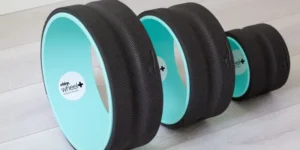
The boring answer that still works. 10 minutes of foam rolling after a session improves perceived recovery and reduces next-day soreness in most studies. The TriggerPoint Grid roller is the right one – high density EVA foam that won’t squish flat in 6 months like the cheap ones.
Don’t waste money on the textured “deep tissue” rollers with knobs sticking out. They’re not better. They just hurt more.
Massage gun
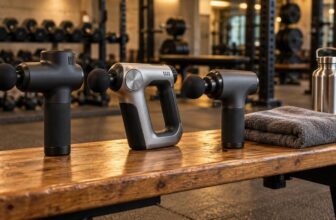
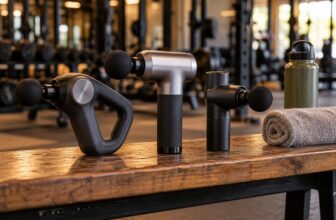
The Theragun Mini or Hypervolt Go 2 are both legit. Around $200. Worth it if you have a chronic tight spot (most lifters do – lats, hip flexors, traps). 2 to 3 minutes per area, post-training or anytime your muscles feel locked up.
Skip the cheap $50 Amazon massage guns. The motors burn out and the percussion isn’t strong enough to actually do anything.
Lacrosse ball or peanut
$5. Goes places a foam roller can’t. Good for hip rotators, traps, between the shoulder blades, glute med. Lean against a wall and roll specific spots. The peanut shape (two balls taped together) works well for the spine without rolling on the vertebrae directly.
Compression boots (if you can afford them)
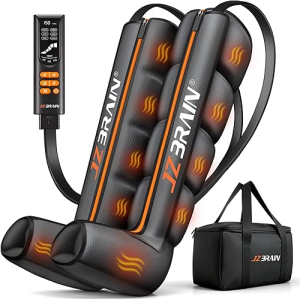
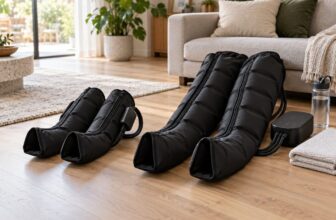
The Normatec or Hyperice boots are around $700 to $1500. They sequentially squeeze your legs to push lymphatic fluid back up. They’re not magic. They feel great. The recovery benefit is real but small compared to the price.
Worth it if you’re training hard and have the money. Not worth it if it’d stretch your budget. We’ve covered these in more depth in our compression boots guide.
Optional: cold and heat
Cold plunges are popular but the science on cold-after-lifting is messy. Cold exposure right after a hypertrophy session might blunt muscle gains. So if you’re plunging, do it on rest days or 6+ hours after lifting.
Sauna is much cleaner from a research perspective. 20 to 30 minutes 3 to 4 times a week is associated with cardiovascular and recovery benefits, no downsides for muscle growth. Worth doing if you have access. We did a full comparison of cold plunges vs ice baths if you want to dig into that.
What to skip
BCAAs. If you eat enough protein, BCAAs do nothing. Save your money.
Glutamine. Same story. Plenty in food. The supplement does nothing.
Tart cherry juice. Some studies show it helps soreness but the dose is enormous (1 cup of juice 2x daily) and the sugar load isn’t great.
Recovery drinks with 50 ingredients. If a product has more than 6 ingredients on the back, it’s marketing.
The actual stack
Here’s what we actually use, in priority order:
- Protein dialed in (1g/lb daily)
- Sleep dialed in (7+ hours)
- Creatine 5g daily
- Magnesium glycinate before bed
- Foam roller post-training, 10 min
- Massage gun on tight spots, 2 to 3 min as needed
- Lacrosse ball for the spots the foam roller can’t reach
- Sauna or cold plunge on rest days, optional
- Compression boots, optional, only if you’ve got the budget
That’s it. The list is short on purpose. The stuff that works is just the stuff that works. Don’t get talked into adding eight more supplements – the marginal returns get tiny fast.
As an Amazon Associate, we earn from qualifying purchases.