

The Recover StackRecover Stack Editorial Team
Recover Stack Review ProcessResearched from specs and verified owner reviews
October 8, 2026
Heads up: this post contains affiliate links. We may earn a small commission if you buy through them, at no extra cost to you.
Cold plunge tubs are everywhere now and they cost between $1,500 and $7,000. The case for them is real – cold exposure has solid research behind it for inflammation, mood, and recovery. But you can also accomplish about 80% of the same thing with a stock tank, a few bags of ice, and a thermometer for around $200.
Here’s the honest comparison after using both for the better part of a year.
The short version
- Same benefits. Both expose you to cold water at 50 to 55°F for 2 to 5 minutes. The body doesn’t care which container you’re in.
- Cold plunge wins on convenience. Press a button, water is cold. No ice runs.
- Ice baths win on cost. $200 vs $3,500.
- Both have downsides. Plunges break and need maintenance. Ice baths need ice every time.
What “ice bath” actually means
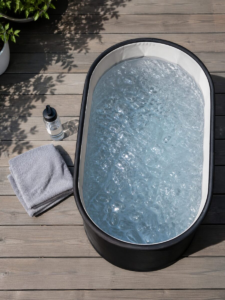
The DIY setup most people use: a 100-gallon Rubbermaid stock tank or galvanized livestock trough. Fill with cold tap water. Add 2 to 4 bags of ice depending on starting water temp. Get in for 2 to 5 minutes. Dump and refill, or treat with chlorine and reuse.
Total cost: stock tank $80 to $150, thermometer $15, ice $4 per session. The whole setup, including ice for a month, runs around $200.
What “cold plunge” actually means
A purpose built tub with a built in chiller and filter, like the Plunge, Ice Barrel Pro, or Inergize. Water stays at your set temp 24/7. Filter cleans the water so you don’t have to drain it for weeks at a time.
Cost: $1,500 to $7,000 for the tub itself plus electricity (the chillers pull about as much as a fridge – $15 to $25 a month for most people).
Are the benefits actually different?
No. Cold water immersion at 50 to 55°F for a few minutes triggers the same physiological response either way. Your body doesn’t know if the cold is from ice melting in a stock tank or from a chiller pump. Norepinephrine spikes the same. Brown fat activates the same. Inflammation drops the same.
The research on cold exposure benefits (mostly out of Susanna Søberg’s lab and Andrew Huberman’s reviews) doesn’t differentiate between fancy tubs and ice baths. The protocol is what matters: temperature, time, frequency.
When the cold plunge is worth it
You’ll plunge daily or near daily. The convenience compounds. If you have to haul ice every morning, you’ll skip it. If you flip a switch and step in, you won’t.
You have space for a permanent setup. Indoors or covered patio. The plunge becomes part of your daily routine instead of a project.
You hate hauling ice. A 24-bag ice run sounds fine the first time. By month two it’s a chore.
You can afford it without thinking about it. If $3,000 makes you nervous, buy the stock tank. The benefits aren’t different.
When the ice bath wins
You’re not sure you’ll stick with it. Try the cheap version first. If you’re still plunging 3+ times a week after 6 months, then upgrade. Most people aren’t.
You travel or move a lot. A stock tank goes wherever. A 400-pound chilled plunge does not.
You only want it a few times a week. Ice for a 3 to 4 day per week schedule is about $50 a month. Less than the electricity for a chilled plunge in some cases.
DIY ice bath setup
Here’s the setup that works:
- 100 gallon Rubbermaid Structural Foam stock tank ($120). The 100 gal is the right size – 50 is too small for most people, 150 wastes ice.
- Floating thermometer ($15). Cheap, accurate enough.
- Bags of ice from the gas station ($4 each, you need 2 to 4)
- Optional: A pool noodle or step stool to make getting in less awkward
- Optional: A timer or stopwatch app
Fill the tank with cold tap water the night before. In summer, water comes out around 70°F and you’ll need 4 bags to hit 50. In winter, 2 bags is plenty. Always check with the thermometer before getting in – colder is not better, you want 50 to 55°F.
Reuse the water for 2 to 4 days max before dumping. Add a tiny amount of chlorine if you want to extend it but honestly its not worth the hassle for most people.
If you’re going to buy a cold plunge anyway
The Inergize and Ice Barrel Pro hit the right balance for most people – around $2,500 to $3,500. The Plunge XL is over $5,000 and we don’t think the difference is worth it.
Skip the chest freezer DIY conversion thing. Yes you’ve seen the YouTube videos. The freezers aren’t built for water and they fail in 6 to 12 months. Insurance won’t cover the water damage. Just don’t.
Real talk on whether cold exposure is worth it at all
The research supports cold exposure for mood and inflammation. The research is mixed on whether cold exposure right after lifting helps or hurts muscle gains – it might blunt hypertrophy if you do it within a couple hours of training. So if you lift, plunge in the morning or on rest days.
And honestly, the practice itself is the benefit. Sitting in cold water for 3 minutes when every cell in your body wants to get out builds something useful that goes beyond the physiology. That part doesn’t depend on whether the tub cost $200 or $4,000.
Verdict
Start with the ice bath. Use it consistently for 6 months. If you’re still plunging 3 to 4 times a week and the ice runs are killing you, then upgrade. Most people will find the stock tank works fine forever.
As an Amazon Associate, we earn from qualifying purchases.
Looking at specific tubs? Our Cold Pod review and Ice Pod Pro review cover the two most-asked-about inflatable options.
You might also like:
- How to Choose a Cold Plunge Tub (2026 Buyer’s Guide)
- Heat vs Ice for Sore Muscles: When to Use Each
- 5 Father’s Day Recovery Gifts He’ll Actually Use (2026)
Browse all Cold Therapy & Ice Baths >