


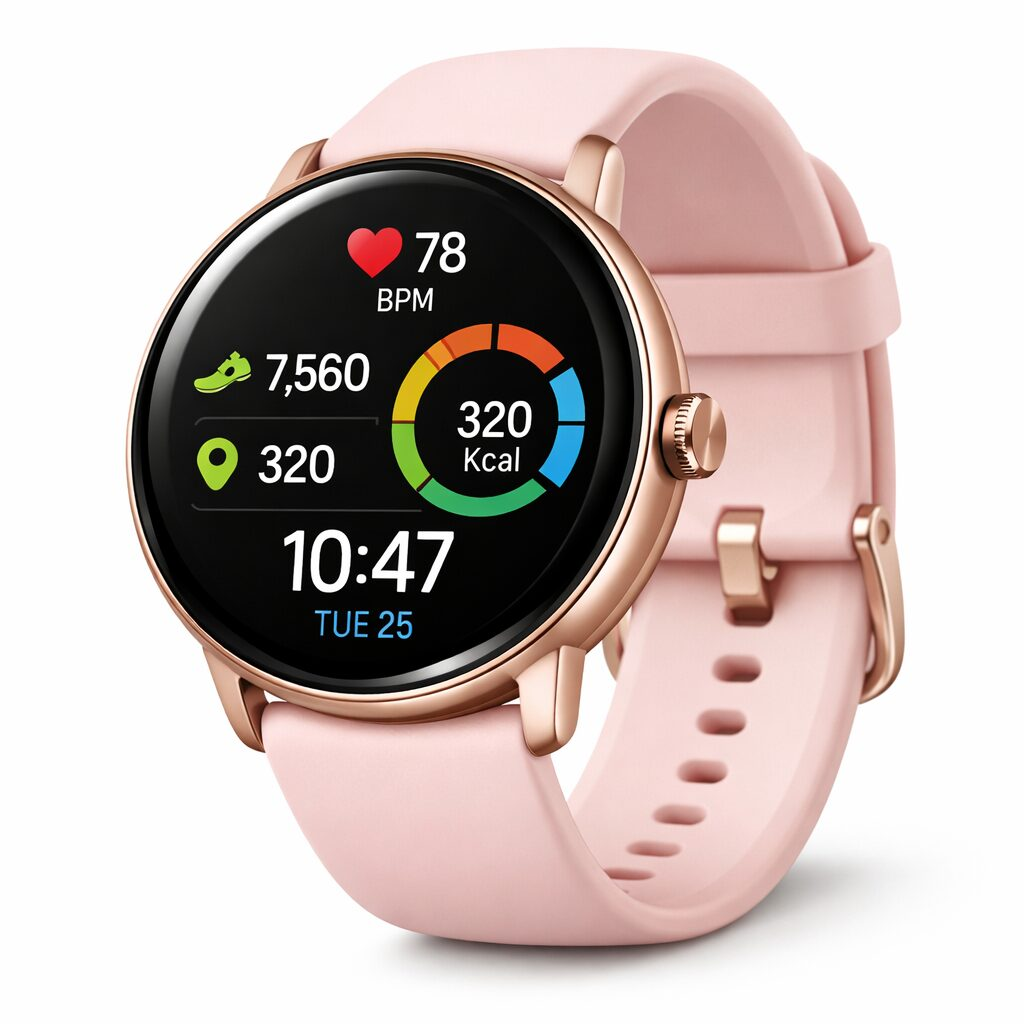
Amazfit GTR Mini 2 Review: A Slim Recovery Watch That Tracks More Than You’d Expect

The Recover StackRecover Stack Editorial Team
Recover Stack Review ProcessIndependently tested & fact-checked
June 1, 2026
Key Features
1.55″ AMOLED Display
Bright, sharp screen that’s easy to read mid-workout. Always-on display option so you don’t have to flick your wrist to check stats.
24/7 Heart Rate + SpO2
Continuous heart rate monitoring with blood oxygen tracking. Useful for gauging recovery readiness each morning before training.
Sleep Score and Stages
Breaks down light, deep, and REM sleep with a daily score. Tracks naps too. Data lines up closely with what you’d get from a WHOOP or Oura.
14-Day Battery
Lasts about 10 days with always-on display, closer to 14 without it. Charges in under an hour with the magnetic puck.
Two Weeks on My Wrist
I grabbed the GTR Mini 2 because I wanted something lighter than the Amazfit T-Rex for everyday wear. At 24.6 grams (without the band), you genuinely forget it’s there. That matters for sleep tracking, bulky watches make side sleeping uncomfortable, and this one doesn’t.
The recovery-relevant data is solid. Morning resting heart rate trends matched what I was seeing on my chest strap, within 2-3 BPM. SpO2 readings were consistent too. I started using the morning readiness data to decide between hard training days and active recovery sessions, and honestly, it worked. Two weeks without an overtraining flare-up is a personal record for me.
Sleep tracking deserves special mention. The REM and deep sleep percentages tracked closely with my Oura Ring data (within about 5-10 minutes per stage). The sleep score gives you a quick at-a-glance number each morning without having to open the app.
Where it falls short versus the $300+ watches: no HRV-based recovery scores, no training load analysis, and the GPS is connected (uses your phone) rather than built-in. For a $90 watch, though, those are fair trade-offs.
Build quality surprised me. The rose gold aluminum case looks more expensive than it is, and the silicone band is soft without being floppy. Didn’t irritate my skin during sweaty workouts or overnight wear.
Pros & Cons
What We Liked
- Accurate heart rate and SpO2 for a budget watch, close to chest strap readings
- Sleep stage tracking rivals devices that cost three times as much
- Crazy light at 24.6g, you forget you’re wearing it at night
- Battery goes 10-14 days depending on settings
Worth Knowing
- No built-in HRV or recovery score, you’re reading resting HR trends manually
- GPS is connected only (needs your phone for outdoor tracking)
- Zepp app can be clunky on first setup, but it smooths out
Quick Specs at a Glance
| Brand | Amazfit |
| Model | GTR Mini 2 |
| Display | 1.55″ AMOLED, 416×416 |
| Case Material | Aluminum alloy |
| Weight | 24.6g (without band) |
| Battery Life | Up to 14 days |
| Water Resistance | 5 ATM |
| Sensors | Heart rate, SpO2, accelerometer, gyroscope |
| Price | $89.99 |
Frequently Asked Questions
Is the GTR Mini 2 good for tracking recovery?
How accurate is the sleep tracking?
Can I wear it in the shower?
Does it work with iPhone and Android?
Final Verdict
The Amazfit GTR Mini 2 won’t replace a WHOOP or Garmin for serious athletes who need HRV-based recovery scores. But for anyone who wants reliable sleep, heart rate, and SpO2 data without spending $300+, it punches way above its price. The fact that it’s light enough to sleep in comfortably is the real win for recovery tracking.
We may earn a commission if you buy through our links.
Related Reviews
You might also like:
- Is the Hypervolt 2 Pro Worth It? Honest 2026 Review
- Theragun Alternatives in 2026: 5 Options That Cost Less
- How to Choose a Massage Gun: 2026 Buyer’s Guide