Recover Stack Review ProcessResearched from specs and verified owner reviews
Updated
October 9, 2026
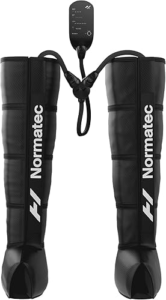
Normatec boots are the recovery tool you see draped over athletes after a race, and they work. They also start around $800 and climb past $1,500 once you add the hip and arm attachments. For most of us that’s a lot of money to squeeze our legs after leg day.
The good news is the gap between Normatec and everyone else has shrunk a lot. Sequential air compression isn’t some secret formula anymore. Plenty of brands now sell boots and leg sleeves that inflate in stages, hold real pressure, and run a full recovery cycle, for a fraction of the price. I pulled together five that people actually buy and keep using, ranging from about $110 up to $279. None of them will feel quite as polished as a Normatec, but a couple come surprisingly close.
If you want the background on how this category works before you spend anything, our guide to choosing compression boots walks through chambers, pressure ranges, and sizing.
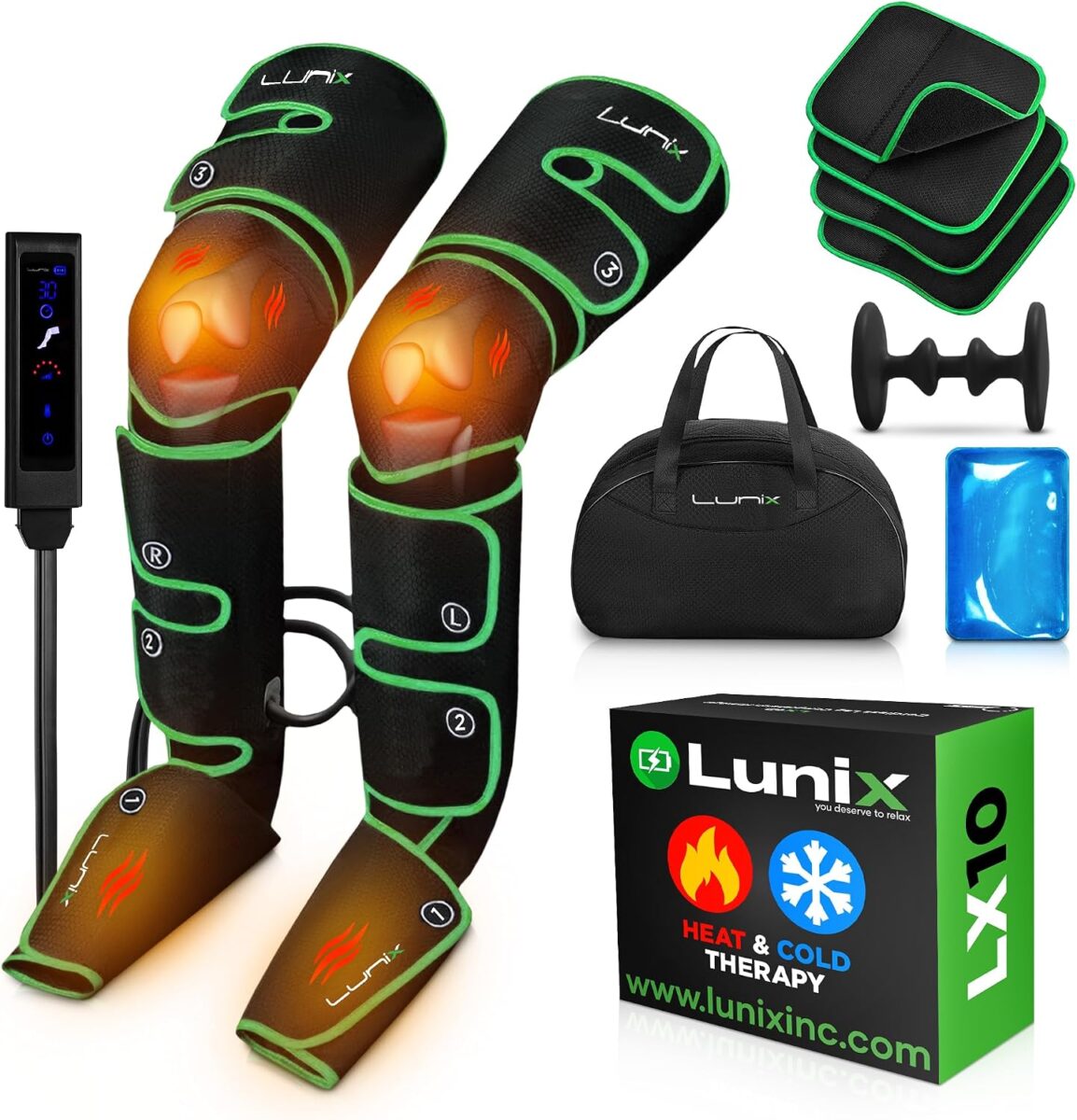
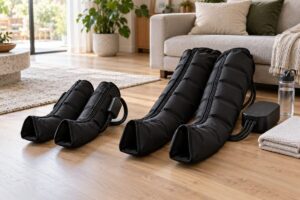
The LX10 wraps your whole leg, foot to thigh, and runs off a rechargeable battery, so you can sit wherever you want without hunting for an outlet. You get 4 programs, 6 intensity levels, built in heat, and 4 reusable gel packs for cold sessions. That’s a lot of extras for this price. Two things to know before you buy: it only has a couple dozen Amazon reviews so far, and Lunix doesn’t publish a pressure rating, so don’t expect the squeeze of a real Normatec. As a cheap way to find out whether compression recovery is for you, it makes sense.
Real boot coverageAdjustable pressureMultiple modes
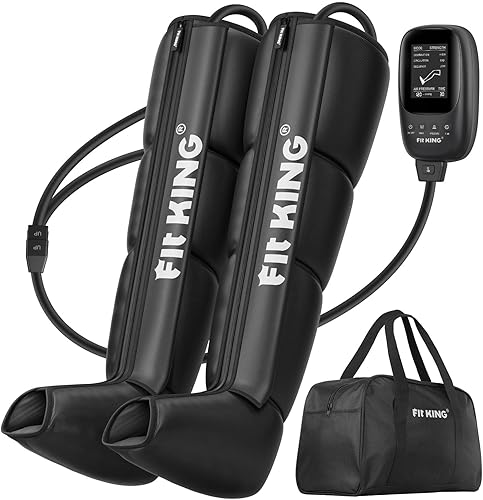
If you want actual recovery boots and not just a calf wrap, this is the one. The FIT KING wraps your whole leg including the foot, runs four overlapping chambers, and pushes harder than the cheaper sleeves on this list. People with bad circulation and folks on their feet all day tend to rate it highest. The downside is it plugs into the wall and the control unit is bulky, so it’s a sit-in-one-spot setup. At under $300 though it’s the closest thing to a budget Normatec boot.
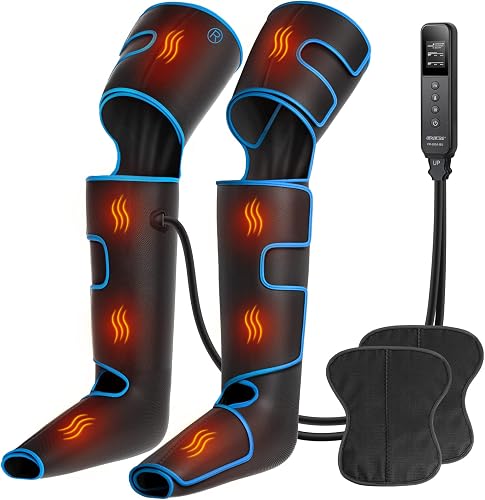
CINCOM has been a quiet best-seller in this space for years, and the heat option is what wins people over. Warm compression on the calves after a long day feels great, and the controls are about as simple as it gets, two buttons and you’re going. It doesn’t reach the foot and the pressure is gentler than the FIT KING, so think relaxation more than hardcore athletic recovery. For the money and the track record, it’s the safe pick.
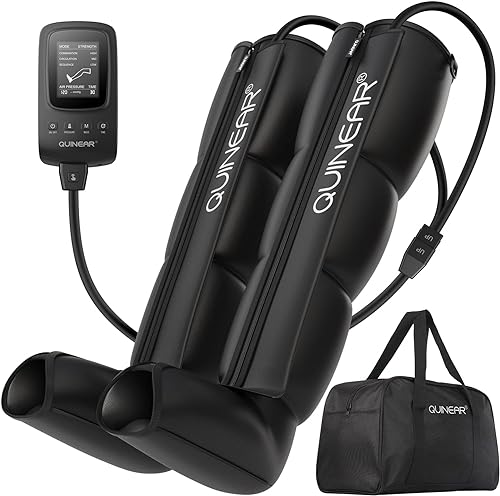
QUINEAR markets this one straight at runners and lifters, and the pressure backs it up. It runs a proper sequential cycle up the leg and the boots feel snug without pinching. Review count is smaller than the others here, but the ones who left them are happy. Price sits close to the FIT KING, so the choice between them mostly comes down to whether you want the foot wraps (FIT KING) or a slightly firmer leg squeeze (QUINEAR). For the deeper dive, our full QUINEAR review has the details.
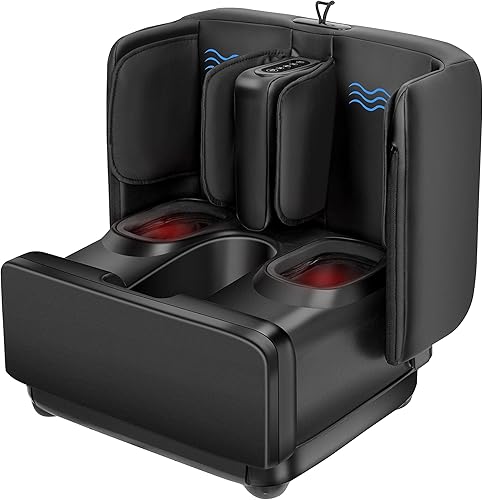
This one’s a bit of an outlier on the list because it skips the thigh entirely and focuses on the feet and calves. If your problem is achy feet from standing all day or plantar pain, the shiatsu rollers plus air squeeze hit different than boots ever could. It’s HSA and FSA eligible too, which is a nice bonus. Just go in knowing it won’t do a thing for your quads or hamstrings. Worth it for the right person, skip it if you want full-leg recovery.
Not quite, and anyone who tells you otherwise is selling something. Normatec holds higher, more precise pressure and the build quality is in another league. But the core idea, sequential air compression that flushes your legs, is the same. The Lunix LX10 and the boot style FIT KING and QUINEAR get you most of the benefit for a quarter of the price or less. For home use a few times a week, that trade is easy to make.
How long should I run a session?
Most people do 15 to 30 minutes after a workout or at the end of a long day. All of these have auto-shutoff timers. Start on a lower intensity your first few times so you can get used to how the squeeze feels, then work up.
Cordless or plug-in, which should I get?
Cordless (the Lunix LX10) wins if you want to move around or use it in different rooms. Plug-in units like the FIT KING and QUINEAR usually push stronger pressure and run longer without worrying about a battery, but you’re stuck near an outlet. If you mostly recover in one chair, plug-in is fine.
Can these help with swelling or circulation, not just workouts?
A lot of buyers use them for exactly that. Gentle sequential compression can help move fluid in legs that swell from sitting, standing, or travel. If you have a medical condition like DVT or lymphedema, check with your doctor first, since pressure therapy isn’t right for everyone.