Recover Stack Review ProcessResearched from specs and verified owner reviews
Updated
July 30, 2026
Red light therapy went from pro locker rooms to home gyms in a hurry, and the falling price is most of the reason. A decent panel now costs less than a few months of physio. The problem is that the market is packed with cheap panels that barely put out enough light to do anything, so picking one really comes down to looking past the marketing.
We leaned toward devices that actually publish their irradiance and wavelength numbers, since those two figures decide whether you get real near-infrared reach into the muscle or just a warm red glow on the skin. Below are five that hold up for post-workout soreness, stiff joints, and the general beat-up feeling after a heavy week. Prices move around, so treat them as ballpark.
Disclosure: Some links in this article are affiliate links. We may earn a commission at no extra cost to you.
Best full-body panel, real output without the boutique price
9.3(210+ reviews)
660/850
Wavelengths (nm)
100+
mW/cm2 at surface
100
LEDs
3 yr
Warranty
Dual wavelengthLow EMFWall mountable
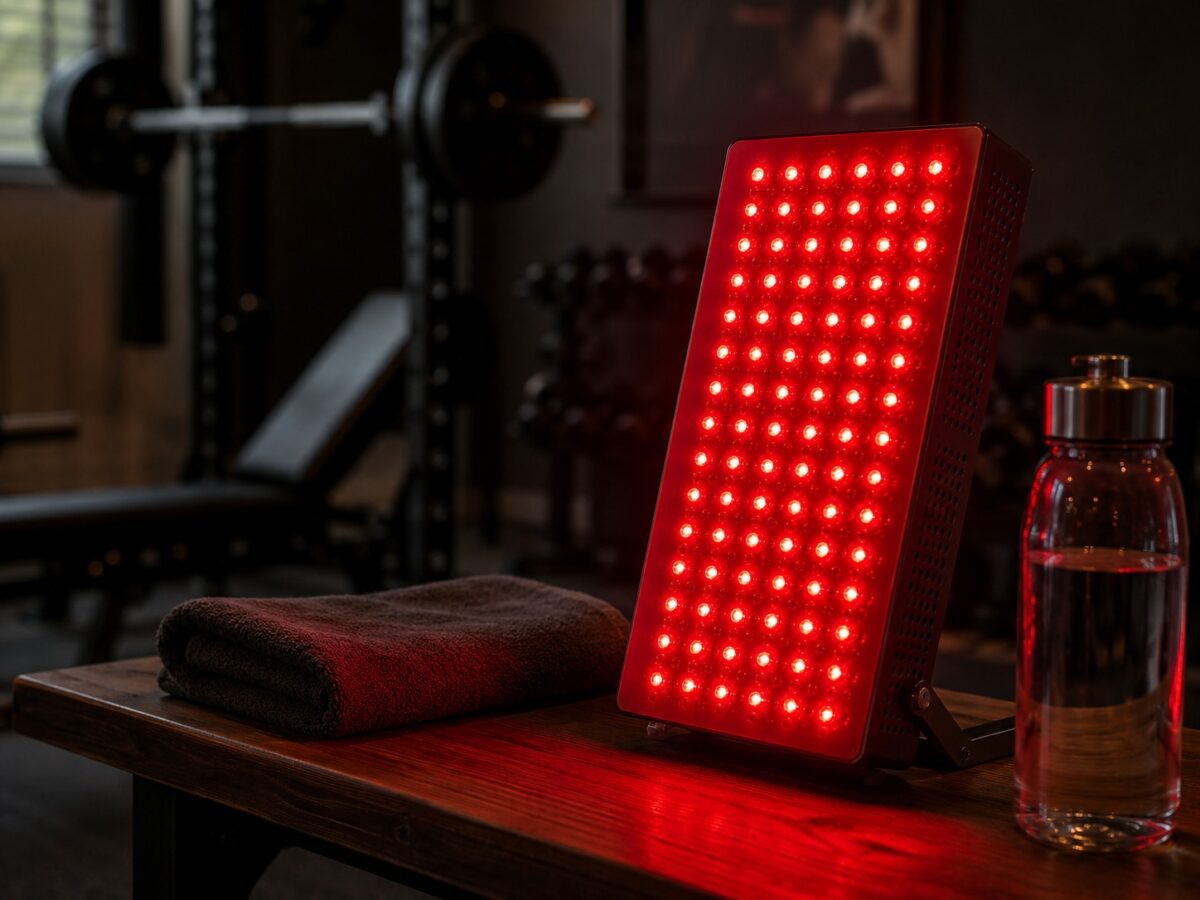
This is the one I point people to first. It runs both 660nm red and 850nm near-infrared, which matters because the 850 is the part that gets down to muscle and joint tissue instead of stopping at the skin. Output is high enough that a 10 minute session at close range actually does something, and you can hang it on a door or stand it up. The fan is louder than youd expect, fair warning, but at this price the light quality is hard to beat.
If youre not sure red light is going to stick as a habit, start here. The BQ40 is smaller so its better for one body part at a time, a sore shoulder or a cranky knee, not your whole back at once. Build quality feels a notch below the Hooga and the coverage is tighter, but for the money it punches well above what you pay. A lot of people buy this one, like it, and upgrade to a bigger panel a year later.
Premium pick for people who want the strongest output
9.1(300+ reviews)
5
Wavelengths
High
Irradiance
Modular
Stackable
3 yr
Warranty
Multi wavelengthPro grade
The MitoPRO costs real money, so its only worth it if you plan to use it most days. You get five wavelengths instead of two, and the extra ones (like 630 and 810nm) give you a wider band to work with for skin and deeper tissue. The output is the highest on this list, which means shorter sessions. Is it five times better than the Hooga? No. But if youre treating a chronic issue and want the nicest gear, this is the pick.
A panel is overkill if all you want to hit is an elbow or a wrist. This little handheld is the size of a TV remote, runs on a battery, and you just press it against the spot that hurts. Dont expect full-body coverage and dont expect it to replace a panel. What it does well is convenience. The one that lives in a gym bag gets used far more than the big panel sitting at home, which tells you something.
The wrap trades light intensity for the ability to actually wear the thing while you do something else. Strap it around a knee, set the timer, and go make coffee. The pad contours to joints way better than a flat panel ever could, so for knees, elbows, and shoulders it just makes more sense. The flip side is the output is gentler, so sessions run longer. Good pick if your problem is one joint and youre tired of holding a device in place.
As an Amazon Associate, we earn from qualifying purchases.
One thing worth saying: red light works best as a supplement to the basics, not a replacement. If your recovery routine is already shaky, a panel wont fix it on its own. Pair it with decent sleep and some easy movement. If youre building out a fuller kit, our Theragun vs Hypervolt breakdown covers the percussion side, and the compression boots guide is worth a read if your legs take the worst of it.