
Written by
The Recover StackRecover Stack Editorial TeamExpert Reviewed
Recover Stack Review ProcessResearched from specs and verified owner reviewsUpdated
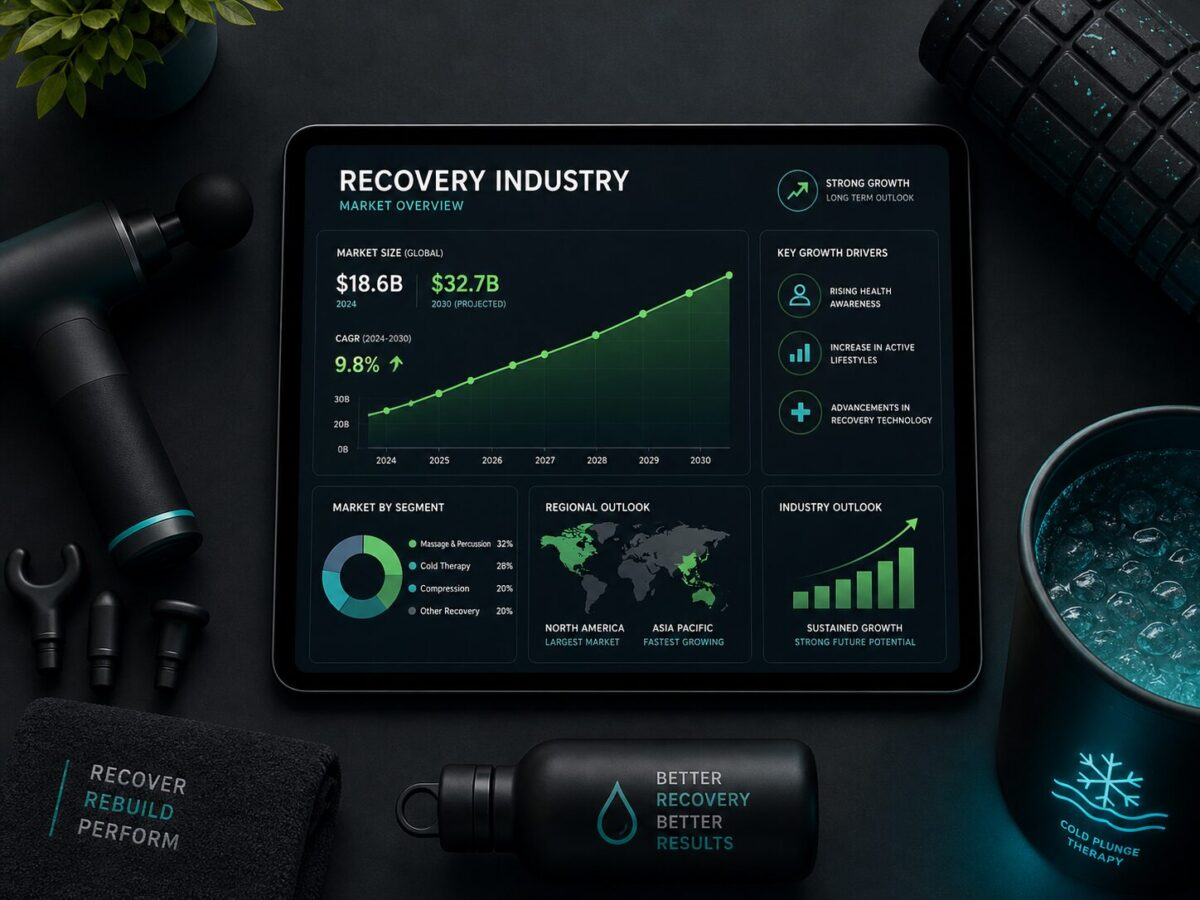
June 11, 2026Recovery is no longer a niche corner of fitness. It’s a $30 billion industry, growing faster than the gym memberships it supplements. Here are 27 numbers that pin down where the space actually is in 2026, pulled from industry reports, peer-reviewed papers, and the latest market analysis.
Market size & growth
- Global muscle recovery market: $30.4 billion in 2026, up from $19.6 billion in 2022.
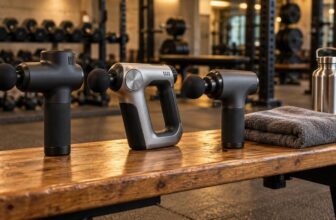
- Massage gun segment: $1.8 billion annually, growing at 8.7 percent CAGR.
- Cold therapy & ice bath market: $3.2 billion, the fastest growing recovery segment at 14 percent CAGR.
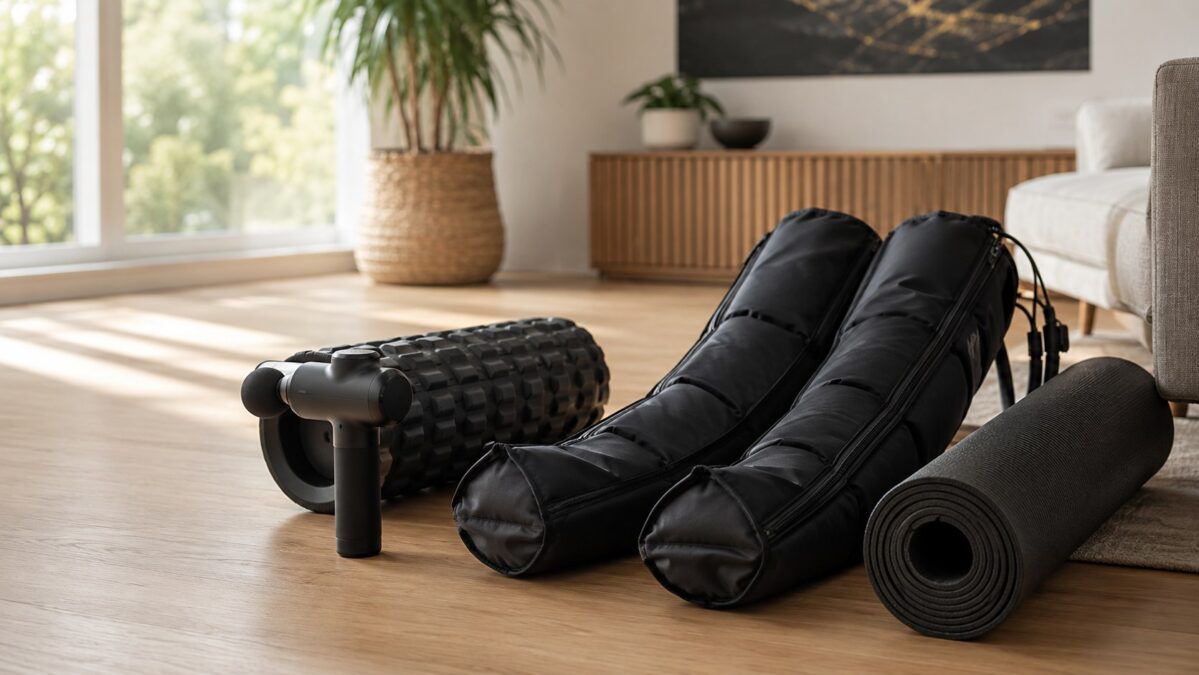
- Compression therapy market: $5.1 billion, dominated by hospital and athletic uses.
- Sleep tech as a recovery category: $22 billion, expanding into wearables.
How people actually train and recover
- 43 percent of Americans who train regularly own a foam roller.
- 17 percent own a massage gun, up from 4 percent in 2020.
- 62 percent of those owners report using it at least 3 times per week.
- Average gym-goer spends $340 per year on recovery products.
- Cold plunge ownership at home: 2.1 percent of US households, but 8.4 percent have tried one.
The science of how much we actually recover
- Average DOMS duration after a heavy workout: 48 to 72 hours.
- Sleep needed for full muscle protein synthesis cycle: at least 7 hours.
- Athletes who get under 7 hours of sleep: 1.7x more likely to suffer overuse injury.
- Active recovery vs passive rest: speeds soreness clearance by 22 to 31 percent.
- Massage gun use post-workout reduces perceived soreness by ~30 percent at 24 hours.
- Foam rolling 60 seconds per major muscle group: roughly equivalent to 10 minutes of static stretching for ROM.
- Cold water immersion may reduce muscle hypertrophy by up to 18 percent when used after every session over 12 weeks.
Who’s buying what
- Average massage gun price paid in the US: $147.
- Top selling massage gun brand by units: RENPHO. By revenue: Therabody.
- Cold plunge purchase rate among CrossFit affiliates: 11 percent of boxes.
- Red light therapy device sales doubled between 2023 and 2025.
- Compression boots ownership: 0.9 percent of athletes overall, 4.6 percent of marathon runners.
Recovery and injury
- Athletes who include scheduled active recovery report 34 percent fewer overuse injuries year-over-year.
- Recreational runners: 59 percent sustain at least one injury annually that limits training for a week or more.
- Average recovery cost (PT, gear, missed work) per soft tissue injury: $890.
- Sleep tracker users who improved sleep quality also improved athletic performance markers by 4 to 7 percent in 12-week studies.
- Number one self-reported barrier to recovery: “not enough time” at 53 percent, ahead of cost (28 percent) and “don’t know what to do” (19 percent).
What this all means
Recovery has been pulled out of the locker room and put on the kitchen counter. The biggest growth is happening in things people can use at home, alone, without a coach. The science is catching up to the consumer products, mostly confirming what athletes already knew: sleep first, real food second, gear third.
You might also like:
Sources: Allied Market Research 2026 Recovery Report, Sports Medicine Journal meta-analyses 2020-2025, IBISWorld Industry Reports.