
Key Features
Dual Isolated Channels
Run two or four pads at once. Each channel gets its own physical dial with a 0 to 100 mA sweep.
5 Therapy Modes
Burst, Normal and Modulation, plus two strength duration programs that fight nerve adaptation.
Wide Adjustment Range
Pulse rate from 2 to 150 Hz in 1 Hz steps. Pulse width from 50 to 300 microseconds in 10 step increments.
Built In Usage Log
Stores 60 sessions and up to 999 hours of treatment time, so a physical therapist can check your homework.
What You’re Actually Getting
Amazon’s muscle stimulator category is a graveyard of app controlled gadgets that launch, pick up a few thousand reviews, and vanish. Then there’s the TENS 7000. It arrived in 2008 looking like a garage door opener, and in August 2026 it’s still the number 1 best seller in the category, sitting at #1,117 across all of Health & Household. That doesn’t happen by accident, so we dug into what keeps it there.
Quick note on where this review comes from. We don’t have a unit on the bench. Everything below is pulled from the official DT7202 instruction manual, the live Amazon listing, the manufacturer’s site, and the patterns that repeat across 111,000+ owner ratings. At that scale, complaints stop being anecdotes and start being data.
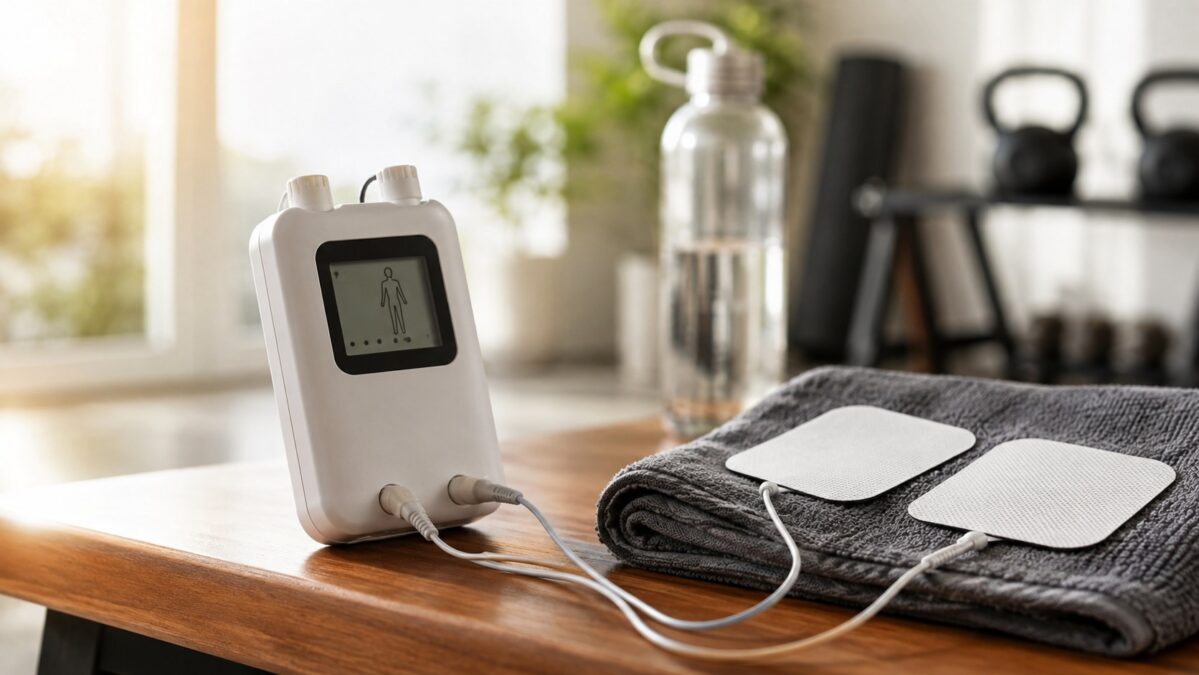
The TENS 7000 is an over the counter TENS device, the kind physical therapists used to send patients home with before every gadget grew an app. Dual isolated channels means you can run two or four electrode pads at once, and each channel has its own dial sweeping from 0 to 100 milliamps. Compass Health claims over 3 million units sold. We can’t audit that number, but the review count makes it believable.
Here’s something odd we hit while verifying specs. The manufacturer’s own product page lists the pulse rate as 2 to 50 Hz. The official manual says 2 to 150 Hz in 1 Hz steps, and the quick start guide even shows 120 Hz on the LCD in its illustration. The manual is correct, the web page undersells its own device. Not a scandal, but it tells you how little marketing polish this thing gets. The documentation does the talking.
Those ranges are the reason to care. Pulse width runs 50 to 300 microseconds. Rate runs 2 to 150 Hz. In practice, the higher frequencies around 80 to 120 Hz produce that pins and needles flood most people use to mask pain while the unit runs. The low end at 2 to 10 Hz works differently, slower thumping pulses usually credited with triggering endorphin release. Cheap TENS pens and stick on patches lock you into presets. This gives you the whole board, which is exactly what our TENS unit buyer’s guide tells you to prioritize.
The five modes sound cryptic on the box (B, N, M, SD1, SD2) but they make sense once decoded. Burst fires short pulse groups at a fixed 100 Hz, between half a burst and 5 bursts per second. Normal is continuous stimulation at whatever you set. Modulation cycles your settings down 50% and back every second so your nerves don’t get used to the signal, which is the main reason bargain units stop feeling like they work after 20 minutes. SD1 and SD2 pull a similar anti adaptation trick, swinging intensity and pulse width through 40% and 70% ranges on a 10 second cycle.
One detail almost nobody mentions: theres a usage log built in. The unit stores 60 sessions and up to 999 hours of total treatment time. It exists so a therapist can confirm you did your home sessions. If TENS is part of a rehab plan, that beats another phone app.
Worth being straight about the science too. Clinical research on TENS is mixed. The evidence generally supports short term relief while the device is running, with much less certainty about lasting effects. Think of it as a volume knob for pain, not a repair tool. For a sore back or an arthritis flare, that can still be the difference between a rough day and a fine one. And if your goal is working sore muscles rather than calming nerves, that’s a different conversation, one we cover in TENS unit vs massage gun.
Now the gripes, because with 111,000 ratings they’re easy to spot. The 9V battery is the big one. Run the intensity high for long sessions and you’ll burn through batteries, some owners report killing one in a couple hours. Longevity is the second pattern, a visible minority of units die within a few months, usually refusing to power on. The stock 2 x 2 inch pads also lose their stick fairly fast. Official replacements run $26.99 for a 16 pack at tens7000.com, and generic pads with the same standard pin connector cost less.
If the battery situation is a dealbreaker, the same company sells a TENS 7000 Elite Rechargeable for $59.99 direct. Same concept, built in cell. The classic model reviewed here stays 9V, which is annoying but is also part of why it costs $38 and never needs a firmware update.
Pros & Cons
What We Like
- Dual isolated channels with a real 0 to 100 mA range on each
- Wider adjustability than most units under $50 (2 to 150 Hz, 50 to 300 µs)
- Two anti adaptation modes so relief doesn’t fade mid session
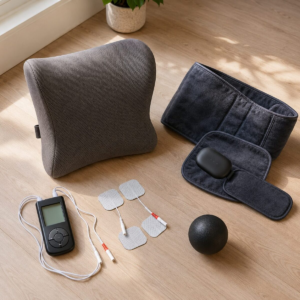
- Complete kit: pads, lead wires, battery, hard case
- Replacement pads are cheap and sold everywhere
Worth Knowing
- Runs on a 9V battery, and heavy use eats them
- A visible minority of owners report units dying inside a few months
- Stock 2 x 2 pads lose adhesion fairly quick
- The LCD looks like a pager from 2009
- Pain relief only. It won’t contract muscle like an EMS unit
Quick Specs at a Glance
| Model | TENS 7000 2nd Edition (DT7202), Roscoe Medical / Compass Health |
| Price | $37.99 on Amazon (checked Aug 13, 2026) |
| Channels | Dual, isolated |
| Intensity | 0 to 100 mA per channel (into 500 ohm load) |
| Pulse rate | 2 to 150 Hz, 1 Hz steps |
| Pulse width | 50 to 300 µs, 10 µs steps |
| Modes | Burst, Normal, Modulation, SD1, SD2 |
| Timer | 1 to 60 minutes, or continuous |
| Power | One 9V battery (included) |
| Size / weight | 4.0 x 2.4 x 1.0 inches, 150 g with battery |
| In the box | Unit, 2 lead wires, four 2×2 electrode pads, 9V battery, hard case, manual |
| Amazon rating | 4.6 / 5 (111,862 ratings) |
Who Should Buy It and Who Should Pass
Get it if you want cheap, adjustable pain relief without pills for a bad back, cranky knees, or a stubborn neck, and you’d rather have two knobs than an app. It’s also the obvious pick if a physical therapist handed you home TENS homework, the usage log was made for exactly that. At $38 it’s a low risk experiment even if TENS turns out not to do much for your particular pain.
Pass if what you want is muscle recovery in the contraction sense. TENS works on nerves for pain. EMS makes muscle fire. Our EMS muscle stimulator roundup covers that side of the fence. Skip it too if disposable batteries drive you nuts, the Elite Rechargeable or a USB charged unit will suit you better. And if you have a pacemaker or any implanted electrical device, TENS is off the table entirely.
Frequently Asked Questions
Is the TENS 7000 the same thing as an EMS unit?
How long does the 9V battery last?
Can I sleep with it on?
Will it help sciatica?
Final Verdict
The TENS 7000 has outlived a decade of prettier competitors because the core is right: two isolated channels, honest 0 to 100 mA output, and a 2 to 150 Hz range that units twice its price still don’t match. At $37.99 it’s the first TENS unit to buy for chronic aches, provided you can live with 9V batteries and pads that need replacing every month or two. If you need actual muscle contraction for recovery work, get an EMS unit instead, this isn’t that tool.
Check Price on AmazonYou might also like:
- How to Choose a TENS Unit (2026 Buyer’s Guide)
- TENS Unit vs Massage Gun: Which One Should You Actually Buy
- Compex EMS Alternatives in 2026: 5 Muscle Stimulators That Cost Less