
Resistance bands are the cheapest thing in most home gyms and somehow the most confusing to buy. You’ll find loops, tubes with handles, flat therapy bands, thick pull-up bands, and fabric booty bands, all sold by a dozen brands at wildly different prices for gear that looks nearly identical. The good news is that picking the right kind matters way more than picking the right brand. Heres how I’d think it through before anything goes in the cart.
Start with the type, not the price
There are really five formats worth knowing, and they don’t do the same job.
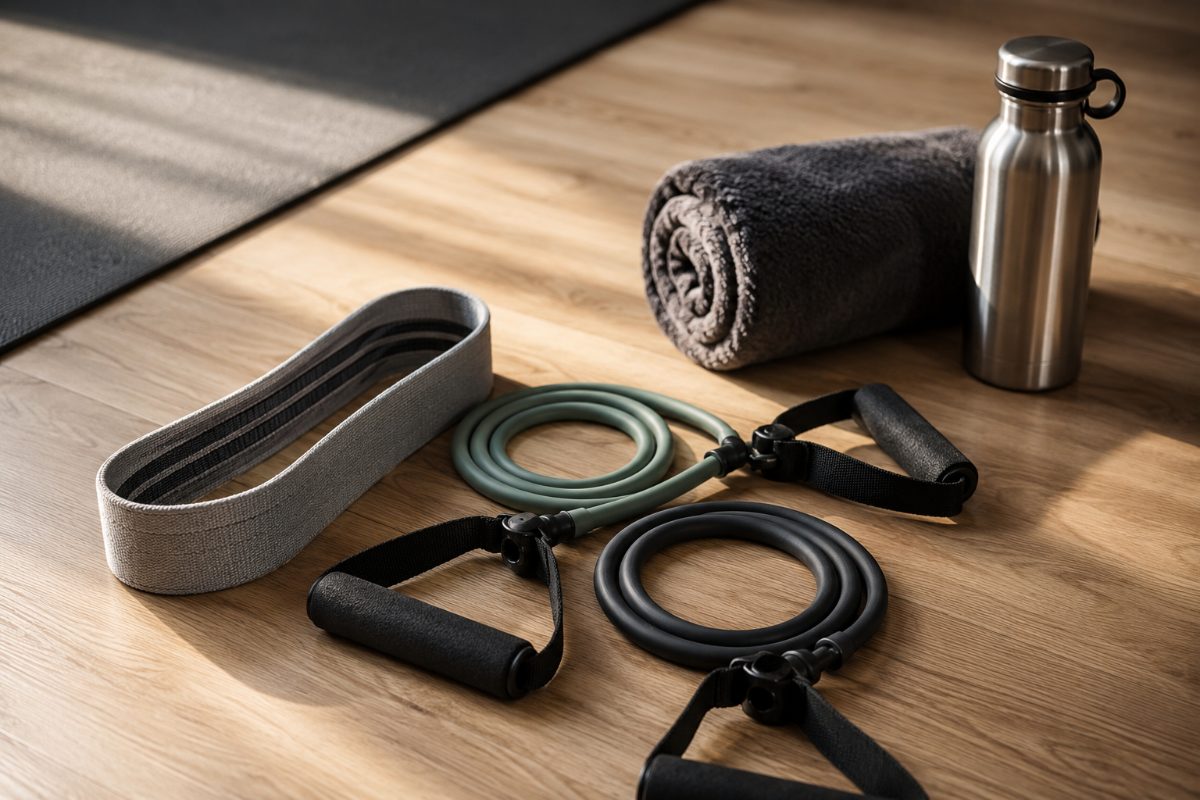
Mini loop bands are the short continuous loops you see wrapped around knees for squats and glute work. Tube bands come with handles and clip to a door anchor, which makes them the closest thing to a cable machine you can stuff in a drawer. Flat therapy bands (the long thin ones physical therapists hand out) are gentle and great for shoulder rehab and warmups. Power bands are the thick heavy loops people use for pull-up assistance and heavy pulls. And figure-8 bands are a niche upper-body option that most people can skip.
If you mostly want lower-body and glute work, fabric mini loops plus a couple of power bands cover almost everything. If you want a full-body setup that mimics gym cables, a good tube band set with a door anchor is the better buy. Rehab and mobility work leans on the flat therapy bands. Match the format to what you’ll actually do, not to whatever set has the most pieces in the photo.
How much resistance you actually need
Bands get sold as light, medium, and heavy, but those labels mean different things brand to brand. The printed pound ratings are rough estimates too, since band tension changes with how far you stretch it. That sounds like a problem and mostly isn’t. What matters is having a range.
A set with three to five resistances is a better value and more useful than one perfect band, because you’ll want lighter tension for warmups and rehab and heavier tension for pulls and squats. If you’re coming back from an injury, start lighter than you think. It’s very easy to overdo it with bands because the load feels easy at the start of the range and then bites hard near the end. Buy a set, not a single band.
Latex, fabric, or TPE
Most tube and loop bands are natural latex. It’s stretchy, durable, and cheap, but thin latex loops can snap eventually and the smell out of the package is real. Fabric bands wrap latex or rubber in cloth. They cost more, but they don’t roll up or dig into your thighs mid-set, which is why fabric wins for lower-body loop work. TPE is the synthetic option worth knowing about if you’ve got a latex allergy, which is more common than people realize.
My rough rule: fabric for anything that sits against bare skin on your legs, latex tubes for upper-body pulling, and TPE only if latex is off the table for you.
The parts that break first
Bands themselves rarely fail if you buy decent ones. The hardware does. On tube sets, the cheap plastic clips and carabiners are the weak point, and a clip letting go under load near your face is not fun. Look for metal clips or solidly molded connectors and a door anchor with a thick strap. On fabric loops, the stitching is what gives out, so more visible stitching lines usually means it’ll last longer. Give the seams a hard look in the reviews before buying.
What you can ignore
Skip anything that leans hard on a companion app. A band is a band. Don’t pay extra for band colors that supposedly map to a workout program, since colors are meaningless across brands anyway. And ignore giant piece-count numbers, a “23 piece set” is usually five bands plus a bag of clips and a flimsy ankle strap.
Quick checklist before you buy
- Pick the format that matches your training (loops for legs, tubes for full-body, flat bands for rehab)
- Get a set with a real resistance range, not one band
- Fabric for lower-body loops, latex tubes for pulling
- Check the clips and stitching, that’s what fails
- Buy a door anchor if you’re going the tube-band route
Frequently Asked Questions
Are resistance bands as good as weights?
What resistance should a beginner start with?
Do resistance bands snap?
Fabric or latex for booty bands?
Bands pair well with the rest of a recovery setup. If you’re rehabbing something specific, our roundups on recovery tools for sciatica and mobility tools for hip pain lean on bands a lot. Swimmers use them constantly too, which we get into in recovery tools for swimmers.
You might also like:
Gear Worth Considering
Two well reviewed sets that cover most of what this guide describes: light loop bands for warm ups and mobility, and a handle set for heavier work.
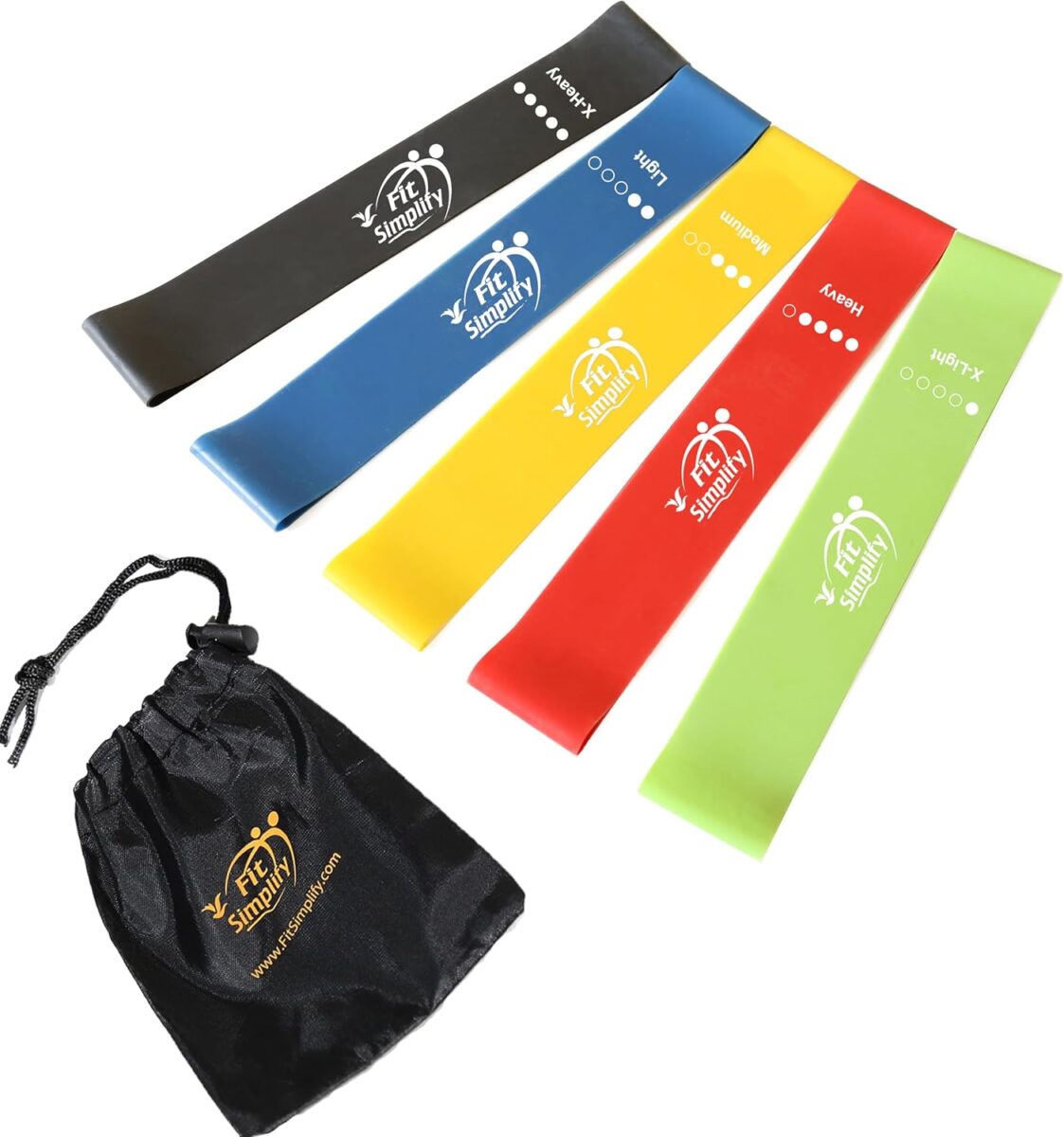
$8.48 on Amazon at time of writing · 4.5 stars from 137,000+ ratings
Check Price on Amazon
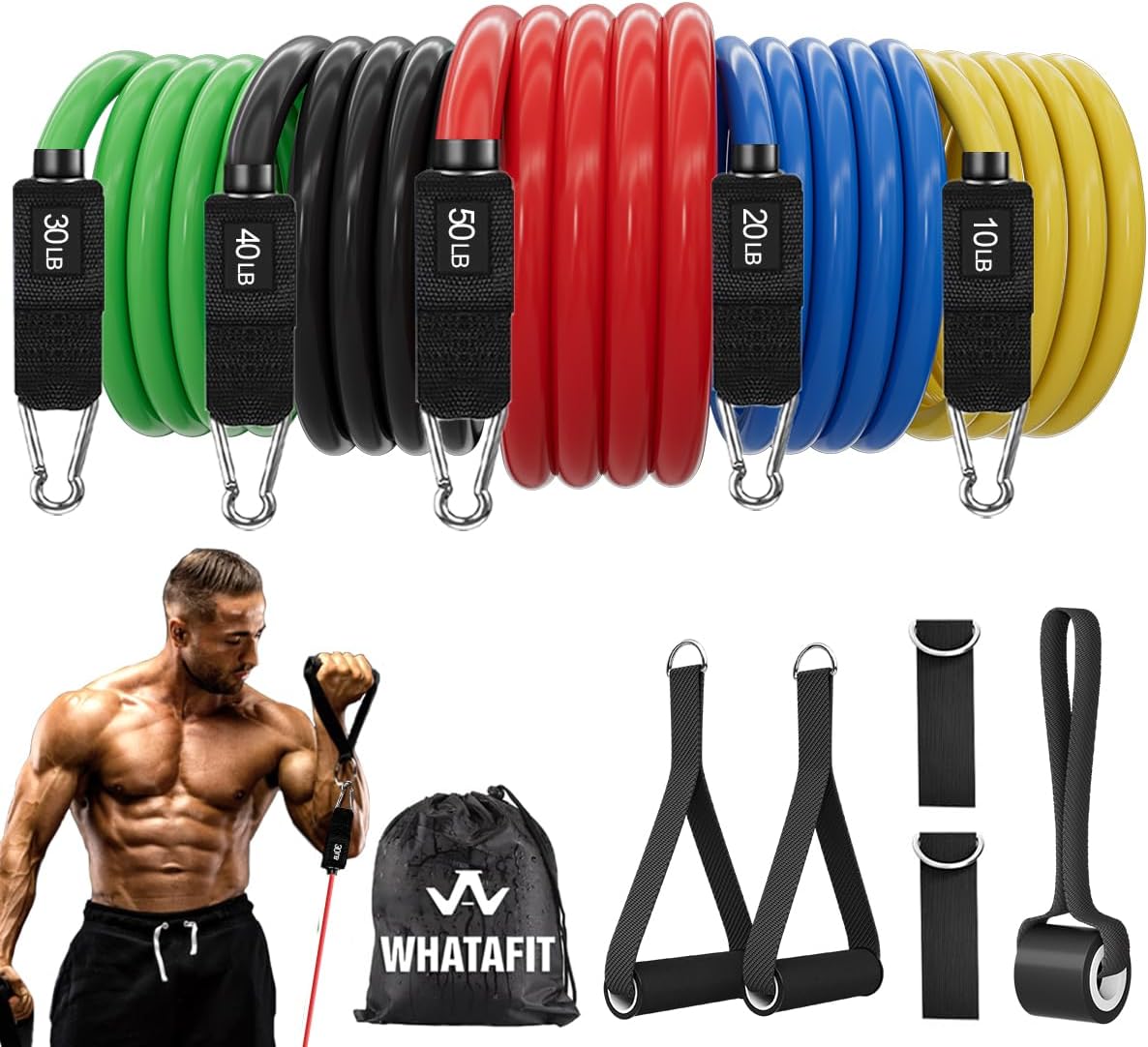
$25.57 on Amazon at time of writing · 4.6 stars from 36,000+ ratings
Check Price on Amazon
As an Amazon Associate, we earn from qualifying purchases.