
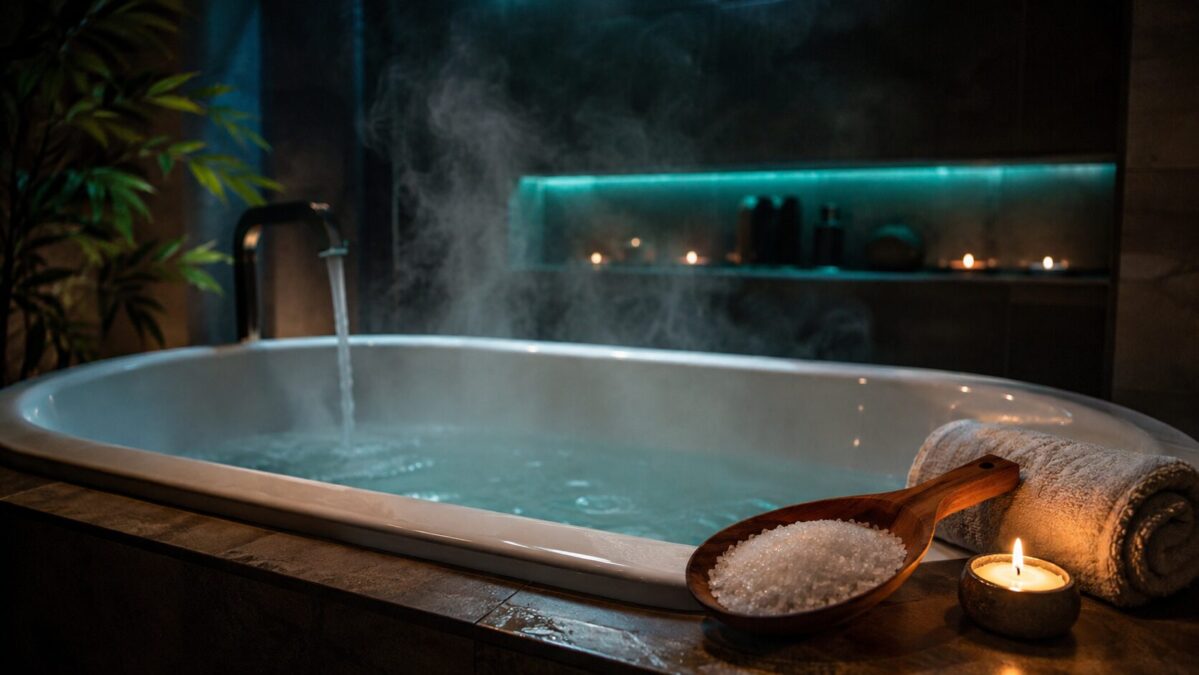
Epsom salt has been the official bath additive of sore athletes for about a century, and the pitch never changes: magnesium soaks in through your skin, muscles relax, soreness fades. One problem. The soaking-in part has almost no science behind it. The bath still helps though, and the reason why is worth understanding, because it changes what you should actually spend money on.
What epsom salt is supposed to do
Epsom salt is magnesium sulfate, and magnesium genuinely matters for muscle function. Low magnesium is linked with cramps, worse sleep, and general misery. So the marketing logic goes: dissolve magnesium in water, sit in the water, absorb the mineral, recover faster.
The catch is your skin. Its entire job is keeping things out, and it does that job well. The evidence for meaningful magnesium absorption through intact skin comes down to a couple of small, poorly controlled studies that researchers have been side-eyeing for years. No solid human trial has shown that bathwater magnesium moves the needle on blood magnesium levels in any way that matters. If you want more magnesium in your body, the boring route works: food, or an oral supplement.
Why the bath helps anyway
Heres the twist. People who take epsom baths report feeling better, and theyre not imagining it. Theyre just crediting the wrong ingredient.
Warm water immersion does real things. It boosts blood flow to tired muscle, eases stiffness, and flips your nervous system toward calm-down mode in a way that a scrolling session on the couch does not. A warm bath in the evening is also one of the better documented sleep aids we have, the post-bath temperature drop mimics what your body does before sleep naturally. And sleep is where recovery happens. We covered the heat side of this in heat vs ice, warm water is basically a full body heating pad.
So the bath works. The salt is mostly vibes. Thats not a reason to skip the salt, a bag costs a few dollars and the ritual matters, placebo or not. Its a reason to not spend real money on it.
What’s doing the work
| Claimed benefit | The salt | The warm water |
|---|---|---|
| Muscle relaxation | Little evidence | Well supported |
| Raising magnesium levels | Not shown through skin | No |
| Stiffness relief | No mechanism shown | Well supported |
| Better sleep after | No | Well supported |
| The ritual feeling nice | Sure | Sure |
If you’re going to do it, do it right
Aim for water thats warm, not lobster pot hot, somewhere you could stay for 15 to 20 minutes without wilting. Evening beats morning if sleep is part of the goal. A cup or two of plain epsom salt is plenty, the boxes suggesting half the bag per bath are selling salt. And skip the fancy “recovery blends” with lavender oil and athlete branding at five times the price, its the same magnesium sulfate with better graphic design.
One honest caveat. If your soreness is the fresh, swollen, just-rolled-an-ankle kind, a hot bath is the wrong call for now, cold wins the first day or two. That split is the whole subject of our heat vs ice guide.
Where epsom baths fit in a recovery routine
Think of the bath as the relaxation and sleep tool in your rotation, not the soreness eraser. Soreness itself mostly resolves on its own schedule, which we dug into in the science of DOMS. If you like gadgets with stronger evidence for that job, massage guns and foam rollers have more going for them, and if you enjoy busting recovery folklore, our recovery myths breakdown pairs well with this one. The epsom bath earns its spot by being cheap, pleasant, and good for sleep. That’s three real wins, just not the three on the box.
Disclosure: Some links in this article are affiliate links. We may earn a commission at no extra cost to you.
As an Amazon Associate, we earn from qualifying purchases.You might also like:
- Best Recovery Tools for Basketball Players in 2026: 5 Picks for Knees That Keep Score
- TENS 7000 Review: The $38 TENS Unit That Won’t Go Away
- Best Recovery Tools for Tennis Players (2026)