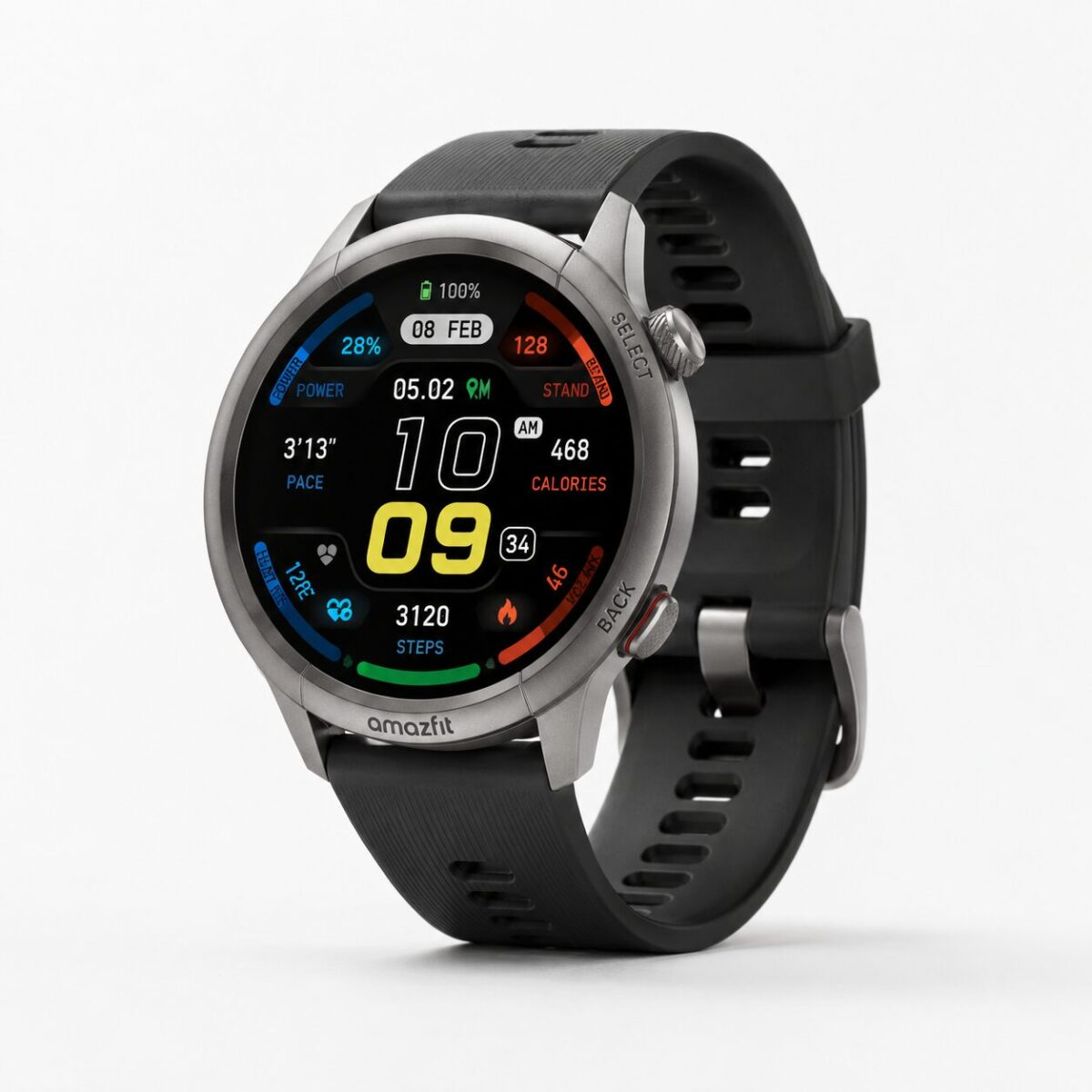
Amazfit Cheetah Review: Sub-$250 Sport Watch With Dual-Band GPS and 14-Day Battery

The Recover StackRecover Stack Editorial Team
Recover Stack Review ProcessResearched from specs and verified owner reviews
October 7, 2026
Key Features
Dual-Band GPS With 6 Satellite Systems
Tracks your route accurately even under tree cover or between buildings. We saw better mile splits than our phone GPS on the same loop.
156 Sport Modes With Smart Detection
Auto-detects runs, walks, ellipticals, and rowing without a tap. Useful when you forget to start a session and twenty minutes have passed.
BioTracker 4.0 PPG Heart Rate
Continuous heart rate, blood oxygen, and stress tracking. The readiness score uses these to tell you when to push and when to back off.
14 Day Battery, 26 Hours GPS
Lasts a full week of mixed use even with sleep tracking on every night. Long enough that you forget when you charged it last.
Pros & Cons
What We Liked
- Dual-band GPS that actually holds in dense urban areas
- Battery life is in true smartwatch-killer territory at 14 days mixed use
- Readiness score built on HRV and sleep data
- Sub-$250 puts it well below comparable Garmin or Coros sport watches
Worth Knowing
- Third party app ecosystem is thin compared to Apple Watch or Wear OS
- Touch screen response can lag for half a second when waking
- No LTE option, so phone needs to be nearby for messages
Full Specifications
| Display | 1.39″ AMOLED, 454 x 454 px |
| Case | Aluminum alloy bezel, polymer body |
| GPS | Dual-band, 6 satellite systems |
| Sensors | BioTracker 4.0 PPG (HR, SpO2, stress), accelerometer, gyro, barometric altimeter |
| Battery | 14 days typical, 26 hours GPS continuous |
| Water Resistance | 5 ATM (suitable for swimming) |
| Compatibility | iOS and Android via Zepp app |
Frequently Asked Questions
How does the Cheetah compare to the Amazfit Balance?
Can I make calls or reply to texts from the watch?
Is the heart rate accurate during weight lifting?
Does it support pairing with chest strap heart rate monitors?
Final Verdict
The Amazfit Cheetah punches well above its sub-$250 price for runners, cyclists, and anyone who cares about training load and recovery metrics. The dual-band GPS, two-week battery, and meaningful readiness score are the headliners. The trade-offs (thinner app ecosystem, no LTE) are easy to live with when the daily training and recovery insights are this dialed in.
You Might Also Like
- Amazfit Balance Review, the lifestyle recovery smartwatch
- Amazfit Helio Strap Review, no-display recovery band
- Amazfit T-Rex 3 Review, rugged outdoor recovery tracker
We may earn a commission if you buy through our links.
You might also like:
- Best Cold Plunge Tubs Under $500 in 2026
- TENS Unit vs Massage Gun: Which One Should You Actually Buy
- How to Choose a TENS Unit (2026 Buyer’s Guide)