
Theragun Relief vs RENPHO Active+: Which Budget Massage Gun Actually Hits Harder?

Disclosure: Some links in this article are affiliate links. We may earn a commission at no extra cost to you.
Two of the most popular budget massage guns right now are the Theragun Relief and the RENPHO Active+. Both cost under $150. Both promise deep tissue percussion. But they’re built for pretty different people, and picking the wrong one means you’re stuck with a recovery tool that doesn’t quite fit.
Here’s how they actually stack up after weeks of testing.
Price and What You Get in the Box
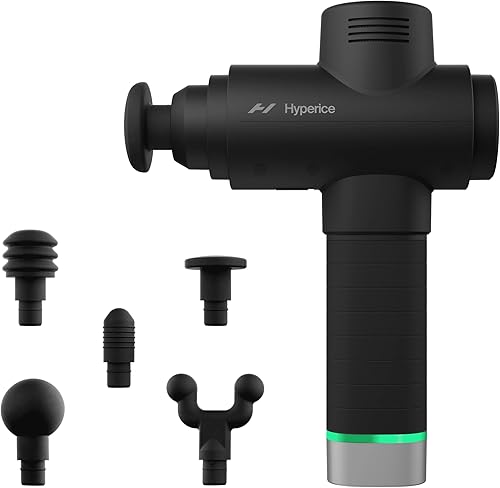
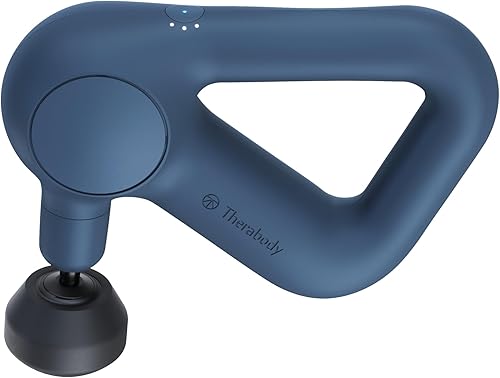
The Theragun Relief runs about $129, and you get the gun, a standard ball attachment, and a USB-C charger. That’s it. No carrying case, no extra heads. Therabody wants you to buy those separately, which is annoying for a device at this price.
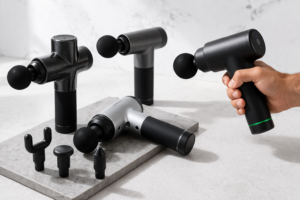
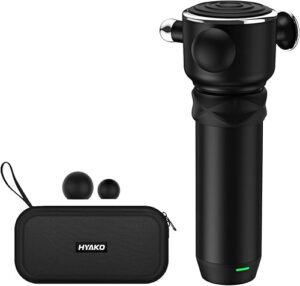
RENPHO’s Active+ comes in closer to $70-80 depending on sales, and it ships with five attachment heads and a carrying case. For roughly half the price, you’re getting twice the accessories. Hard to argue with that on paper.
How They Feel in Your Hand
This is where the Theragun pulls ahead, and it’s not close. The triangular grip lets you hit your back, shoulders, and calves without bending your wrist at weird angles. After 10 minutes of working on your quads, your hand isn’t fatigued.
The RENPHO uses a traditional straight handle. It works fine for legs and arms, but reaching your upper back? Awkward. You end up doing that weird over-the-shoulder crane move. It’s not a dealbreaker, but it gets old fast.
Percussion Power and Noise
The Relief hits at up to 2,400 percussions per minute with 40 lbs of no-stall force. That’s real pressure. You can lean into a tight spot and the motor doesn’t bog down. Three speed settings keep things simple.
RENPHO’s Active+ maxes out at 3,200 PPM across five speeds, but the stall force is lower, around 25-30 lbs based on our testing. So it moves faster but can’t push as deep. If you’re a bigger athlete who needs serious pressure on dense muscle tissue, you’ll feel the difference. For everyday soreness after a gym session, the RENPHO handles it fine.
Noise-wise? The Theragun Relief is surprisingly quiet for a budget model. RENPHO’s Active+ gets louder at the top two speeds, not enough to wake someone up, but enough that you’ll notice it during a TV show.
Battery Life
Theragun Relief lasts about 120 minutes on a full charge. Solid. The RENPHO Active+ gets roughly 2-3 hours depending on the speed setting. Both charge via USB-C, which is the right call. Neither has a removable battery, though, so when it dies mid-session you’re plugging in and waiting.
Build Quality
Pick up both guns and you’ll feel the difference immediately. The Relief has a matte finish with a denser, more premium feel. RENPHO’s Active+ is lighter, which some people prefer, but the plastic feels thinner. Neither one feels like it’ll break anytime soon, but the Theragun inspires more confidence if you’re tossing it in a gym bag regularly.
Who Should Buy Which
Get the Theragun Relief if: you want stronger stall force for deep tissue work, you care about ergonomics, and you don’t mind paying more for fewer accessories. The triangular grip alone makes it worth it if you’re using a massage gun daily.
Get the RENPHO Active+ if: you’re on a budget, you want multiple attachment heads out of the box, and your recovery needs are more general, post-workout soreness, occasional tight spots, nothing too extreme. At half the price, it’s honestly a great deal for casual users.
Both are solid picks. But if I had to keep one? The Theragun Relief edges it out for anyone serious about recovery. That grip design and motor power matter more than a carrying case you’ll probably leave in your closet anyway.