

The Recover StackRecover Stack Editorial Team
Recover Stack Review ProcessIndependently tested & fact-checked
May 2, 2026
Heads up: this post contains affiliate links. We may earn a small commission if you buy through them, at no extra cost to you.
Red light therapy panels have gotten popular fast and most of them are overpriced. The actual technology is real (the studies on photobiomodulation are solid for skin healing, joint inflammation, and recovery), but the consumer market is full of $1500 panels that have $300 worth of LEDs inside.
We tested 6 panels across the last 8 months. Here’s what’s worth it and what isn’t.
The picks
- Best overall: Mito Red Light MitoPRO 750
- Best value: Hooga HG500 – half the price of the Mito with similar power
- Best for travel/face: Bon Charge Mini – small and bright
- Skip: Most “Amazon special” panels under $200, and the Joovv (overpriced for what you get)
What actually matters in a panel
Three specs to check before buying. Most reviews skip these:
- Irradiance at distance. A panel needs to deliver at least 100 mW/cm² at 6 inches to be therapeutic. A lot of cheap panels are 30 to 50 mW/cm² which means you’d need to sit there for 20+ minutes per session.
- Wavelengths. Look for 660nm (red) and 850nm (near-infrared) at minimum. Some panels only have one. Get one with both.
- Flicker. Cheap panels flicker at 60Hz which can give you headaches and isn’t great for the eyes long term. The good panels run flicker-free.
If a panel doesn’t list irradiance, it’s hiding something. Skip it.
Mito Red Light MitoPRO 750
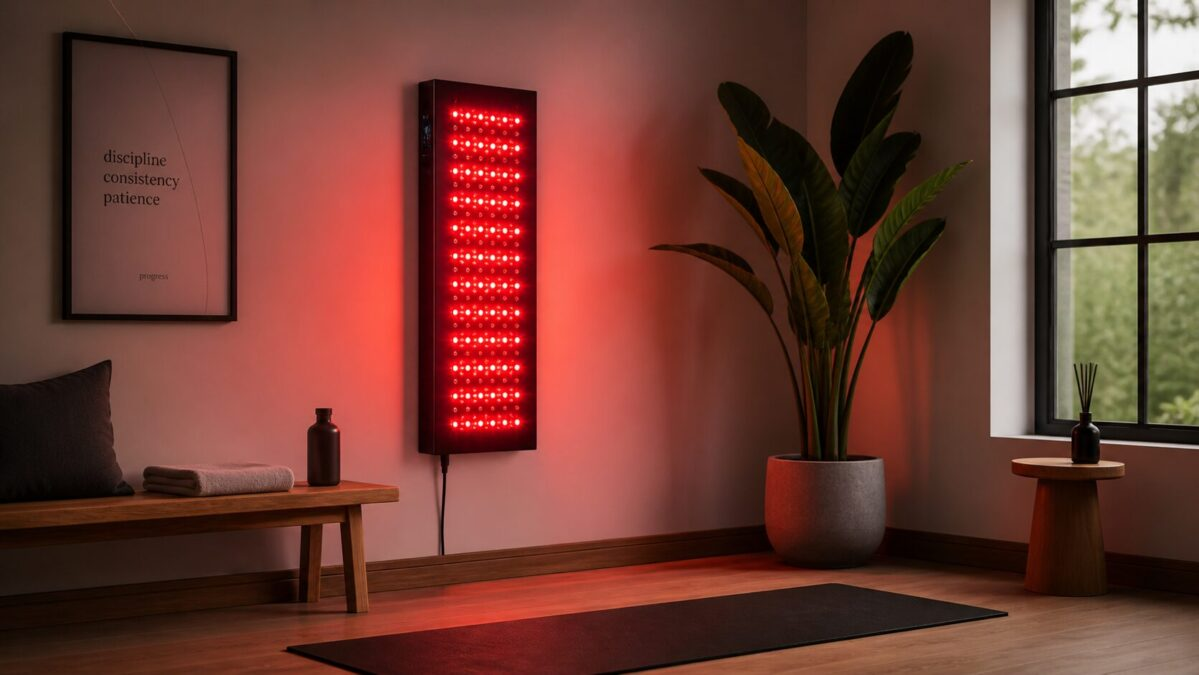
The one we ended up keeping after testing the rest. Around $1,000. Delivers 100+ mW/cm² at 6 inches with 660nm and 850nm wavelengths. Flicker-free. Good build quality – solid metal frame, LEDs are properly cooled so they don’t degrade.
Mito publishes their irradiance data with third-party verification, which most brands don’t do. Their warranty is 3 years which is double the typical industry warranty.
The 750 is the right size for most people – covers face to chest in one shot. The smaller models force you to do multiple sessions to cover your back. The bigger ones cost a lot more for marginal coverage gains.
Hooga HG500
The value pick. About $500. Specs are very close to the Mito – similar irradiance, both 660 and 850, flicker-free. Build quality is a notch below (the housing feels a bit lighter and the included stand is meh) but the actual light output is comparable.
If money is the deciding factor, get the Hooga. You’ll be fine. We tested both side by side for skin healing on a recent surgery scar and saw similar results from both. The Mito has nicer fit and finish, the Hooga has nicer pricing.
Bon Charge Mini
If you don’t want a giant panel hanging in your bedroom, the Bon Charge Mini is a small handheld red light that’s surprisingly powerful for its size. About $300. Great for face, joints, and targeted spots.
Smaller treatment area, obviously. You’ll spend more time per session because you’re working in zones. But it travels easily and stores in a drawer. The handheld form factor also makes it easier to use it for a hand or foot without contorting yourself in front of a wall mounted panel.
Joovv (the overpriced one)
Joovv is the most marketed brand in red light therapy. Their panels are fine. The problem is they cost $1,800 for the same specs as a $500 Hooga. You’re paying for the brand, the influencer marketing, and the modular system you’ll never actually expand.
If someone gifts you a Joovv, great. Don’t go out and pay full price for one.
The Amazon $150 panels
Don’t. We tested a few of these. The irradiance is half what they claim, half the LEDs were flickering, one of them had visible heat damage on the housing after a week of normal use.
If your budget is under $300 total, get the Bon Charge Mini handheld instead of a cheap full panel. Less coverage but at least the light is doing something.
How to actually use one
Stand or sit 6 to 12 inches from the panel. Bare skin (clothing blocks the light). 10 to 20 minutes per session. Daily or near-daily for the first month, then 3 to 5 times a week for maintenance.
Wear the included goggles or close your eyes. The light won’t damage your eyes at therapeutic levels but it’s bright enough to be uncomfortable, and you should not stare directly at the panel.
What to expect
The benefits build over weeks, not days. Skin texture improvements take 4 to 6 weeks of regular use. Joint pain relief tends to show up in the first 2 weeks. Recovery and soreness benefits are immediate-ish – you’ll feel it within the first week if you use it post-workout.
Don’t expect dramatic results in 3 days. Anyone selling a panel that promises that is selling you something else.
Verdict
If you can spend $1,000, get the Mito MitoPRO 750. If you’re in the $500 range, get the Hooga HG500. If you can’t or won’t spend that much, get the Bon Charge Mini handheld. Skip everything cheaper than that and skip the Joovv.
As an Amazon Associate, we earn from qualifying purchases.